A website that gets traffic but no enquiries isn’t failing because of bad luck or the wrong audience. It’s usually failing at one or more specific, identifiable points, and every one of them is fixable. Our team at Pixel Wave works through exactly this kind of diagnosis with clients regularly, looking at speed, messaging, trust, mobile experience, and navigation together rather than in isolation, because that’s how conversion problems actually get solved. If your site is bringing in visitors who never take the next step, it’s worth finding out exactly where they’re dropping off before spending more on driving traffic to a page that isn’t ready to convert it.
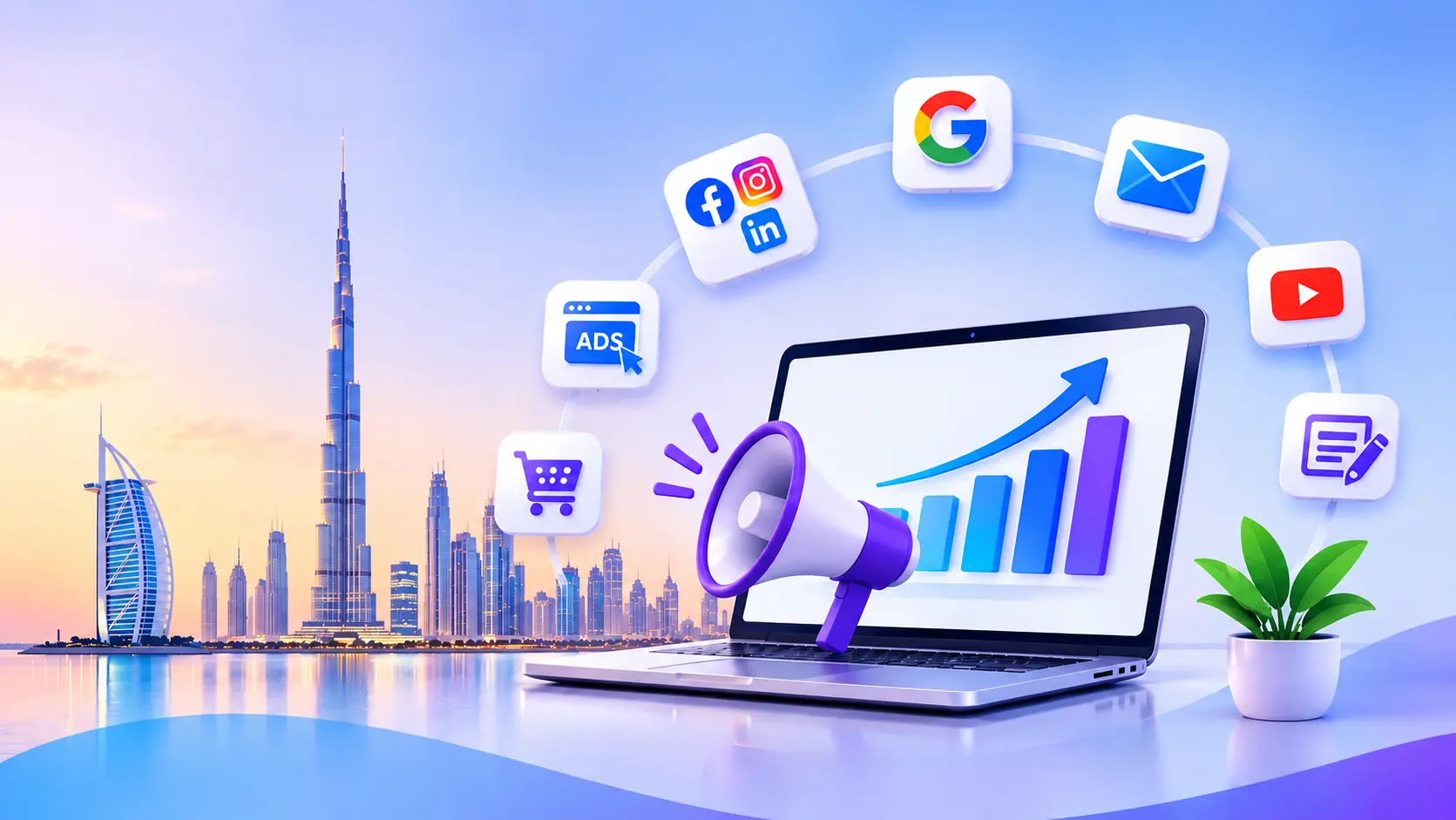
The seven main types of digital marketing are search engine optimization (SEO), content marketing, social media marketing, pay-per-click (PPC) advertising, email marketing, affiliate marketing, and influencer marketing. Each one reaches customers through a different channel and pays off on a different timeline. Some bring organic traffic over several months. Others bring paid clicks the same day you switch them on.
At Pixel Wave, we work with business owners who often ask us which of these they actually need. The honest answer is usually “two or three, chosen well” rather than all seven at once. Below, we explain what each type does, who it suits, and how our digital marketing team thinks about combining them for companies in Dubai and across the UAE.
1. Search Engine Optimization (SEO)
SEO is the work of improving your website so it appears higher in unpaid Google results. It covers keyword research, page content, site structure, technical performance, and earning links from other reputable sites.
SEO is slow but compounding. A new website usually needs several months before it gains real traction, and the results keep building after that. In Dubai, it also pays to think about how people search: many use English, some use Arabic, and plenty add “near me” or an area name like Business Bay or JLT.
Technical health matters as much as content. A slow or poorly built site holds back even great pages, which is why we pair SEO with clean web development from the start.
Best for: businesses that want steady, long-term enquiries without paying for every click.
2. Content Marketing
Content marketing means publishing useful material, such as blog posts, videos, guides, and case studies, that answers the questions your customers ask before they buy. You are not pushing a sale. You are earning trust so that when someone is ready, your name is already familiar.
Good content also feeds every other channel. A strong guide can rank on Google, get shared on LinkedIn, and become the link in your next email. Our digital content creation work starts with real customer questions, not guesses, so each piece has a clear reason to exist.
Best for: service businesses, B2B companies, and anyone with a longer buying decision.
3. Social Media Marketing
Social media marketing is promoting your business on platforms like Instagram, LinkedIn, Facebook, TikTok, and X. It includes organic posting, community management, and paid social campaigns.
The platform should match your customer. A law firm and a streetwear label should not post the same way, or in the same place. Consistency matters just as much. People notice when your Instagram looks nothing like your website, and that mismatch costs trust. A clear identity across every channel, which is the focus of our digital branding service, makes each post feel like it comes from the same business.
Best for: brands that depend on visibility, community, and regular interaction with customers.
4. Pay-Per-Click (PPC) Advertising
Paid digital advertising allows businesses to reach targeted audiences through platforms such as Google, Meta, and LinkedIn. Depending on the platform and campaign settings, advertisers may pay for clicks, impressions, or other outcomes. It is the fastest way to put your offer in front of people who are actively searching for it.
The ad is only half the job. If someone clicks and lands on a confusing or slow page, you have paid for a visit that goes nowhere. We always look at the landing page before we touch the ad budget, and a focused website design built around one clear action usually does more for results than raising the bid.
Best for: launches, promotions, and businesses that need enquiries quickly while SEO builds in the background.
5. Email Marketing
Email marketing means sending messages to people who have chosen to hear from you: subscribers, past customers, and warm leads. You own the list, so you are not at the mercy of an algorithm change.
It works especially well for repeat business. A short welcome series, a seasonal offer, or a helpful tip sent at the right moment keeps your name in front of people who already know you. If you run an app, the same thinking applies to push notifications and in-app messages, which we often build into projects through our mobile app development service.
Best for: online stores, subscription businesses, and any company with returning customers.
6. Affiliate Marketing
In affiliate marketing, outside partners promote your product and earn a commission on each sale or lead they bring in. You only pay when something happens, which makes the cost easy to predict.
It suits businesses with a clear product, a simple checkout, and healthy margins. The trade-off is control. Affiliates speak for your brand, so you need good tracking, clear rules, and partners you would be comfortable having represent you.
Best for: ecommerce brands and software products with a defined sale or sign-up.
7. Influencer Marketing
Influencer marketing means partnering with creators who already have an engaged audience. Their followers trust their recommendations, so a genuine endorsement can introduce your business to a niche quickly.
Choose creators by audience fit, not follower count. A smaller creator with loyal local followers often beats a famous name whose audience has no interest in what you sell. Rules around paid promotion in the UAE are specific, so confirm the licensing and disclosure requirements before you sign anyone.
Best for: lifestyle, hospitality, retail, and consumer brands with a visual product or story.
The 7 Types of Digital Marketing at a Glance
| Channel | Typical Timeline | Cost Model | Ideal Business Type |
|---|---|---|---|
| SEO | 3 to 6 months for steady results | Ongoing monthly service or project-based, no per-click fee | Businesses that want long-term enquiries without paying for every click |
| Content Marketing | 3 to 6 months to build traction | Per piece or monthly content plan | Service businesses, B2B companies, and longer buying decisions |
| Social Media Marketing | Weeks for visibility, months for community | Monthly management plus optional ad spend | Brands that depend on visibility and regular customer interaction |
| PPC Advertising | Days to start, results as the campaign is tuned | Ad budget (pay per click) plus management fee | Launches, promotions, and businesses that need leads quickly |
| Email Marketing | Weeks to build a list, quick returns once it exists | Software subscription plus content and setup | Online stores, subscription businesses, and repeat-customer companies |
| Affiliate Marketing | 1 to 3 months to recruit and track partners | Commission paid only on sales or leads | Ecommerce brands and software with a clear sale or sign-up |
| Influencer Marketing | Days to weeks per campaign | Flat fee, gifted product, or commission per creator | Lifestyle, hospitality, retail, and consumer brands |
Timelines and costs vary by industry and competition, so treat these as starting points rather than promises.
How SEO, PPC, and Social Media Work Together
These three channels work best as a loop, not as separate projects.
- PPC gives you fast data. Paid campaigns show which keywords and messages actually bring enquiries. We use that information to decide which terms deserve a long-term SEO page.
- SEO keeps the results. Once a page ranks, it keeps bringing visitors without a fee per click. That lowers your reliance on paid traffic over time.
- Social media builds familiarity. Someone who sees your brand on Instagram or LinkedIn is more likely to click your name later in Google results, and more likely to trust your ad when it appears.
Here is how it plays out. A person sees your post on LinkedIn and does not act on it. A week later, they search for your service and find your page in the organic results. If they leave without enquiring, a retargeting ad reminds them a few days after that. Each channel does a different job, and the sale often comes from the combination.
The channels also share the same destination. If the website is slow or unclear, all three lose money at once, which is why we fix the site before scaling any of them.
How to Choose Where to Start
You do not need all seven. Start with the questions below.
- How fast do you need results? If you need leads this month, begin with PPC. If you can wait, put effort into SEO and content.
- What does your customer do before buying? If they research for weeks, content and SEO matter most. If they buy on impulse, social and influencers carry more weight.
- Is your website ready? Every channel sends people to the same place. If the site is slow, unclear, or outdated, fix that first.
Most of the businesses we work with begin with a solid website, one search channel, and one social channel. They add more only after those are working.
Frequently Asked Questions
What is the most effective type of digital marketing?
No single type wins for every business. SEO and PPC tend to capture people already looking for a service, while content, social, and influencer marketing build awareness. The best mix depends on your customer and your budget.
Which type of digital marketing is best for a small business?
Most small businesses do well starting with SEO, a properly set up Google Business Profile, and one social platform where their customers already spend time.
How long does digital marketing take to work?
PPC can bring visitors within days. SEO and content marketing usually take a few months to show steady results.
Ready to Build the Right Mix?
Picking from seven channels is easier when someone looks at your goals, your customers, and your website together. If you would like a straight answer on where to begin, get in touch with our team and we will walk through it with you.